
Last updated October 16, 2026
 Water damage drying
 Fire & smoke cleanup
 Mold remediation
 Storm response
 Sewage cleanup
 Reconstruction
Free visual inspection and a written scope of work before any mitigation begins - photos, moisture readings, and drying logs go in your claim file
The scope we write is the scope we bill. Anything new gets shown to you, in writing, before we touch it.
Get your free estimateHow to Hire a Damage Restoration Contractor in Fort Lauderdale: A Step-by-Step Guide
After Hurricane Ian, Florida’s Department of Agriculture and Consumer Services logged more than 6,000 contractor fraud complaints, a large share of them from homeowners who signed assignment-of-benefits agreements at the front door before anyone had even looked behind the drywall. In Fort Lauderdale, where salt air, tropical humidity, and fast-moving afternoon storms create year-round water intrusion risk, a damage restoration contractor can show up at your doorstep within hours of a flood or a mold discovery. Some are legitimate. Others are storm chasers with a laminated badge and a tablet running a payment app. Our Complete Guide to Damage Restoration in Fort Lauderdale gives you the exact questions, the license lookups, and the contract clauses that separate the first group from the second, so that by the time you make a call, you can already tell which kind of company you’re dealing with.
Quick Answer
To hire a damage restoration contractor in Fort Lauderdale, verify their Florida DBPR license (and check whether they also carry a mold-specific credential), require a written scope of work with a fixed price before any equipment enters your home, reject any contract that includes assignment-of-benefits language or open-ended time-and-materials billing, and ask for a trackable arrival time. A legitimate company will put the price in writing first, show up when it says it will, and document the work with before-and-after photos.
Restoration work we handle
Table of Contents
- How to Verify a Florida DBPR License in Under 60 Seconds
- Contract Clauses to Reject: Assignment of Benefits and Open-Ended Billing
- What a Written Scope of Work Must Include Before Equipment Enters Your Home
- How to Get an Arrival Time You Can Actually Track
- The Three IICRC Certifications That Matter for Water and Mold Work
- How Insurance Fits Into the Hiring Decision
- Red Flags That Show Up In the First Phone Call
- What a Real Estimate Looks Like (and What a Fake One Looks Like)
How to Verify a Florida DBPR License in Under 60 Seconds
Florida licenses damage restoration contractors through the Department of Business and Professional Regulation, known as the DBPR. The state’s online portal at myfloridalicense.com lets you search by business name, owner name, or license number, and it takes less than a minute if you know what you’re looking for. Here’s the step-by-step:
- Go to myfloridalicense.com and click “Verify a License.”
- Search by the company’s legal business name. Do not search by the name on the side of the truck. A company that markets itself as “Fort Lauderdale Water Pros” might be licensed under a completely different entity name.
- Check the license type. For most water damage restoration work, you want to see either a Certified General Contractor license (CGC) or a Certified Building Contractor license (CBC). For mold remediation, Florida requires a separate Mold Remediation license (MR) or Mold Assessor license (MRSA).
- Confirm the license status reads “Current, Active.” Not “Delinquent,” not “Probation,” not “Null and Void.”
- Check the license’s original issue date. A company that got its license six months ago is not necessarily fraudulent, but in Fort Lauderdale, where post-storm scammers cycle through new LLCs every season, a long-standing license is a real signal.
Here’s a detail most guides skip: a single water damage job can legally require two different licenses. If a company is pulling wet drywall and performing structural repairs, that’s contracting work, and it falls under the GC or BC license. If the same company is treating visible mold growth behind that drywall, Florida law requires a separate mold remediation credential. Before you sign anything, verify both. A company that tries to talk you out of checking is giving you an answer anyway.
Contract Clauses to Reject: Assignment of Benefits and Open-Ended Billing
In Florida, the most dangerous sentence in a restoration contract is shorter than a tweet. Assignment of benefits, usually abbreviated AOB in the fine print, means you are signing over your insurance rights to the contractor. The contractor then bills your insurance company directly, and in some cases can file suit against the insurer on your behalf. Florida has seen thousands of AOB abuse cases since 2010, many concentrated in South Florida. Here’s what to reject, in plain terms:
- Assignment-of-benefits language. Any clause that says you “assign” or “transfer” your insurance benefits or rights to the contractor. Politely cross it out. If they push back, the conversation is over. You can still work with your insurance company directly and normally, with the contractor billing you or the insurer as a third party, but never sign your rights away.
- Open-ended time-and-materials billing. A contract that says you’ll pay “for actual hours worked plus materials” with no cap is a blank check. In Fort Lauderdale, where a mitigation job can run for a week while drying equipment runs, time-and-materials without a hard ceiling is how $4,000 jobs become $14,000 invoices.
- Verbal-only price estimates. If the price is not in writing before equipment arrives, you don’t have a price. You have a guess. In Florida, a contractor who won’t put numbers on paper before starting work is testing how far they can push the final number.
- Direction-to-pay clauses. These are an AOB variant that instructs your insurer to pay the contractor directly, often without your review of the invoice. The insurer’s check should go to you first.
We tell homeowners the same thing on every call: a written price before any work starts is not a nice-to-have. It’s the bare minimum. At Wendell Restoration Fort Lauderdale, the price is put in writing before any tool is picked up, and the number on the screen is the number you pay.
What a Written Scope of Work Must Include Before Equipment Enters Your Home
Before any air mover, dehumidifier, or injection drying system crosses your threshold, you need a written scope of work-our Water Damage Restoration Maintenance Checklist for Fort Lauderdale Homeowners covers what to look for. This is the document that turns a contractor’s verbal promises into a legally binding plan. In Fort Lauderdale, where a water event in a 1940s Coral Ridge bungalow needs a very different drying strategy than a 2010s Victoria Park townhome, the scope protects you from guesswork disguised as expertise. A legitimate scope includes at least these items:
- Affected square footage. The contractor should specify exactly which rooms, closets, and ceiling cavities are included. “Master bedroom and adjacent hallway” is not a scope. “Master bedroom (180 sq ft), hallway (60 sq ft), and shared wall cavity with guest bath” is.
- Drying method. This should state whether the job uses conventional air-mover drying, desiccant dehumidification, or injection drying for wall cavities. If you see a brand name like Phoenix or Injectidry, that’s a good sign the contractor is using professional-grade equipment rather than rental-store fans.
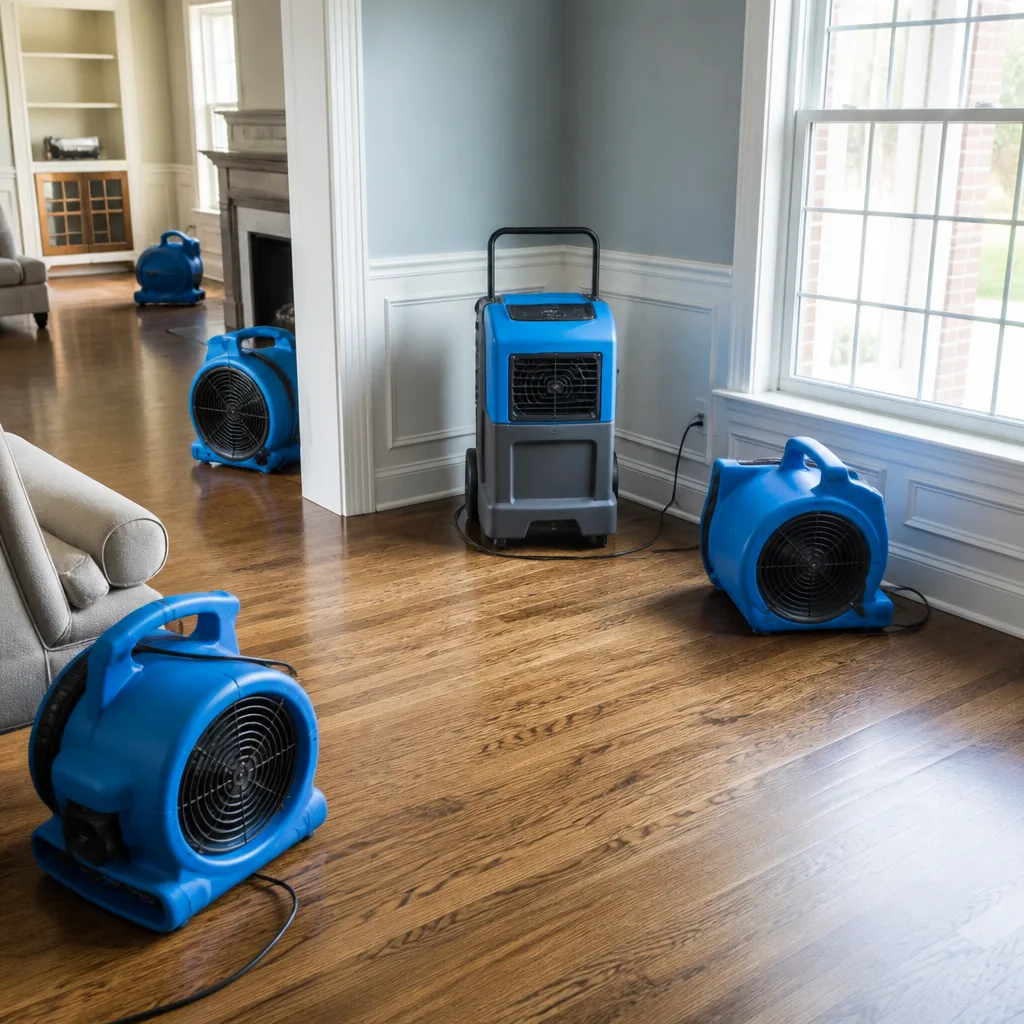
- Equipment count and placement. The number of air movers, dehumidifiers, and any specialty equipment should be listed. This matters because drying time and cost both depend on it, and because you can walk through the house and verify the equipment is actually there.
- Projected timeline. Not an exact completion date, because moisture readings dictate the end, but a projected dry-down window (typically 3 to 5 days for a standard Category 1 water event in a Fort Lauderdale home).
- Moisture monitoring plan. The contractor should commit to taking daily psychrometric readings (tracking the air’s moisture level so you know when your home is truly dry, not just surface-dry) and providing you those readings or a summary.
- Fixed price. Not a range. Not an estimate. A number. It should be itemized by line item so you can see what the equipment rental, labor, and monitoring cost separately.
If a contractor offers a scope that lists only “water damage mitigation” as a single line item with no square footage, no equipment count, and no drying method, you are signing an invitation for bill padding.
How to Get an Arrival Time You Can Actually Track
The standard arrival promise in the restoration industry is a four-hour window. “Someone will be there between 10 and 2.” In Fort Lauderdale, where a Category 2 water event can start growing mold in 48 hours and afternoon thunderstorms can trap a technician in traffic for an hour, that four-hour window is often a polite fiction. The alternative is simple: ask for an arrival time you can track the way you track a ride from the airport.
A live arrival time means the company tells you when the technician is dispatched, shows you their estimated arrival on a map or via text update, and calls if there is a delay. Companies that run this way are not rare because the technology is hard. They’re rare because it requires giving a customer visibility into internal dispatch decisions, and that visibility is exactly what a lot of legacy restoration companies avoid. When you call to book a job, ask this question directly: “Can you give me a live arrival time, or just a window?” The answer tells you more than their Google reviews do.
We built Wendell Restoration Fort Lauderdale around live arrival times because Blake Sorensen, our owner, spent enough years in the field to know that a homeowner staring at a wet floor in Victoria Park doesn’t want a window. They want to know how many minutes until a truck pulls up. If a company can’t give you that, regardless of their ratings, you should keep looking.
The Three IICRC Certifications That Matter for Water and Mold Work
The IICRC (Institute of Inspection, Cleaning and Restoration Certification) is the closest thing the restoration industry has to a national credentialing body. When a company says its technicians are “IICRC certified,” that statement is meaningful only if you know which certification they hold. The three that matter most for water and mold work in Fort Lauderdale are:
- WRT: Water Restoration Technician. This is the foundational water damage credential. A WRT-certified technician understands the science of drying: how moisture moves through building materials, how to classify water categories, and how to position drying equipment for maximum efficiency. If a company can’t name a single WRT-certified technician on staff, that’s a red flag.
- ASD: Applied Structural Drying. This certification goes beyond WRT to cover whole-structure drying, including hard-to-dry materials like plaster, brick, and multi-layer flooring. In Fort Lauderdale, where many older homes in neighborhoods like Sailboat Bend and Riverside Park have plaster walls and original wood floors, ASD training matters more than it does in a newer subdivision of drywall boxes.
- AMRT: Applied Microbial Remediation Technician. This is the mold-specific certification. An AMRT-certified technician is trained in proper containment, negative air pressure setup, and antimicrobial treatment protocols. If mold is involved, you want AMRT on the job, not just WRT.
You do not need to become fluent in these acronyms. You need to know them well enough to ask one question: “Which IICRC certifications do the technicians on my job actually hold?” A company that answers with a specific certification tells you something real. A company that answers “we’re fully certified” without naming a credential is dodging the question.
At Wendell Restoration Fort Lauderdale, every job follows IICRC, RIA, and IFA standards, and our technicians use professional equipment from manufacturers like Phoenix, XPOWER, and Injectidry, the same brands deployed on large commercial loss sites.
How Insurance Fits Into the Hiring Decision
Insurance is almost always in the room during a restoration job, even when you do not see it. Your homeowner’s policy likely covers sudden and accidental water damage, which means your insurer will want documentation: photos, moisture logs, a detailed scope, and an itemized invoice. A restoration contractor who works well with insurance makes the process smoother. One who works poorly with insurance makes it a fight.
Here’s what to look for:
- Photo documentation. The contractor should take before, during, and after photos at every stage. Not just for their records. For your insurer. A company that offers before-and-after photo updates by text is doing this right, because you see exactly what the adjuster sees.
- Direct adjuster coordination. A good restoration company will speak directly with your insurance adjuster, explain the scope, and answer questions about drying methodology. This is not the same as billing your insurer directly; it just means the contractor is professionally equipped to talk to an adjuster without putting you in the middle.
- Line-item invoices. Insurance companies want granular billing: equipment rental per day, labor hours, materials, monitoring visits. A contractor who invoices in one lump line item is making your claim harder to get approved.
- Written guarantee. Does the work carry a written guarantee? If a repair fails a month later, who comes back, and what does it cost you? Wendell Restoration Fort Lauderdale includes a 365-Day Done Right Promise in writing on every job: if it’s not done right, we make it right, with a free second visit if the repair fails.
One more thing about insurance in Florida: assignment-of-benefits abuse has made many insurers jumpy about any company that tries to remove the homeowner from the billing conversation. If a contractor tells you “don’t worry, we’ll handle your insurance company,” that is not a courtesy. That’s a warning sign. The best contractors keep you in the loop and the insurance company in the loop, simultaneously.
Red Flags That Show Up in the First Phone Call
You can often disqualify a bad restoration contractor before they ever step onto your property. The first phone call is a screening tool if you know what to listen for. Here are the tells:
- No arrival time, just a window. If the company can’t commit to a live arrival time during the booking call, they are telling you how their entire operation runs. Move on.
- Pushy about immediate signing. A legitimate company wants to assess the damage before handing you a contract. A storm chaser in Fort Lauderdale wants a signature before anyone looks behind the wall, because the signature locks in leverage.
- Won’t discuss license numbers. Any licensed contractor in Florida can produce their DBPR license number in seconds. If they deflect, they’re either unlicensed or working under someone else’s license, both of which are problems.
- Vague about equipment. Ask what brand of drying equipment they use. A real restoration company will name brands like Phoenix, XPOWER, or B-Air without hesitation. A company that says “we have fans and stuff” is not doing professional-grade drying.
- No written scope mention. If the phrase “we’ll put everything in writing” never comes up, you should say it yourself. If they balk, hang up.
- Reviews that mention price changes. Read reviews looking specifically for mentions of surprise charges or invoices that were higher than quotes. Five reviews that mention a price change after work started are worth more than fifty generic five-star reviews.
What a Real Estimate Looks Like (and What a Fake One Looks Like)
Most homeowners in Fort Lauderdale have never seen a legitimate water damage estimate before they need one. That’s why so many bad estimates get signed. A real estimate is a document. A fake estimate is a conversation. Here is the difference, using typical Fort Lauderdale pricing as a reference point:
| Line Item | Legitimate Estimate Range | Red Flag |
|---|---|---|
| Water extraction (Category 1, single room) | $250 – $500 | Quoted as “water removal” with no extraction method or equipment specified |
| Drying equipment rental (per air mover, per day) | $45 – $80 | Equipment fee charged as a flat “drying package” with no equipment count listed |
| Industrial dehumidifier (per day) | $90 – $150 | No dehumidifier listed at all, or a dehumidifier brand the company can’t name |
| Moisture monitoring visit (per visit) | $75 – $125 | Monitoring billed as a single end-of-job lump sum with no visit count |
| Antimicrobial treatment (per 100 sq ft) | $150 – $300 | “Sanitizer spray” line item with no antimicrobial product name or EPA registration number |
| Drywall removal and replacement (per sheet) | $85 – $140 installed | Replacement quoted as “included” with no square footage or sheet count |
These are Fort Lauderdale market ranges as of 2025, and they move with supply costs and labor availability. The point of seeing the numbers is not to memorize them. It’s to recognize what a legitimate itemized estimate looks like: specific line items, specific equipment, specific quantities. A fake estimate has one line: “Water damage restoration: $6,500.” That’s not an estimate. That’s a demand.
At Wendell Restoration Fort Lauderdale, no-hassle upfront pricing means the price is put in writing before any work starts, and a digital invoice is texted to you so you can pay from the link. The number on the screen is the number you pay. No surprise line items, no “we discovered more damage” phone calls that end with a second invoice.
Common Mistakes to Avoid
- Signing before reading the entire contract. Restoration contracts in Florida can be long, and the problematic clauses are usually buried on page three. Read every page. If a contractor is in a hurry to get a signature, that hurry is itself a signal.
- Hiring the first company that shows up at your door. After a storm in Fort Lauderdale, door-knockers appear within hours. Some are legitimate local companies. Many are not. Door-knocking is not disqualifying, but it means you should verify licenses, check for AOB language, and get a written scope before agreeing to anything.
- Assuming insurance will cover everything without checking your policy first. Many Fort Lauderdale homeowner policies carry higher deductibles for water damage, and some exclude flood damage entirely. Know your policy before you hire, so you know what you’re personally paying.
- Treating drying time as negotiable. Rushing a dry-down to save a few days on equipment rental can leave moisture behind walls, which becomes a mold problem in Fort Lauderdale’s humidity within weeks. Let the moisture readings dictate the timeline, not the invoice.
- Choosing based on price alone. The cheapest restoration quote in Fort Lauderdale is cheap for a reason, and that reason is usually fewer equipment pieces, less monitoring, or unlicensed labor. The most expensive is not automatically the best either. Compare scopes side by side, not just bottom-line numbers.
- Forgetting to verify that the company actually pulled permits. Some restoration work in Fort Lauderdale, particularly structural repairs and full re-pipes, requires city permits. A contractor who skips permits is saving you money now and creating a liability when you sell the house.
- Paying in full before the job is done. Never pay 100% upfront. A deposit is normal for big jobs, but the final payment should not clear until the work is complete, the moisture readings are in, and you’ve seen the after photos.
See the difference
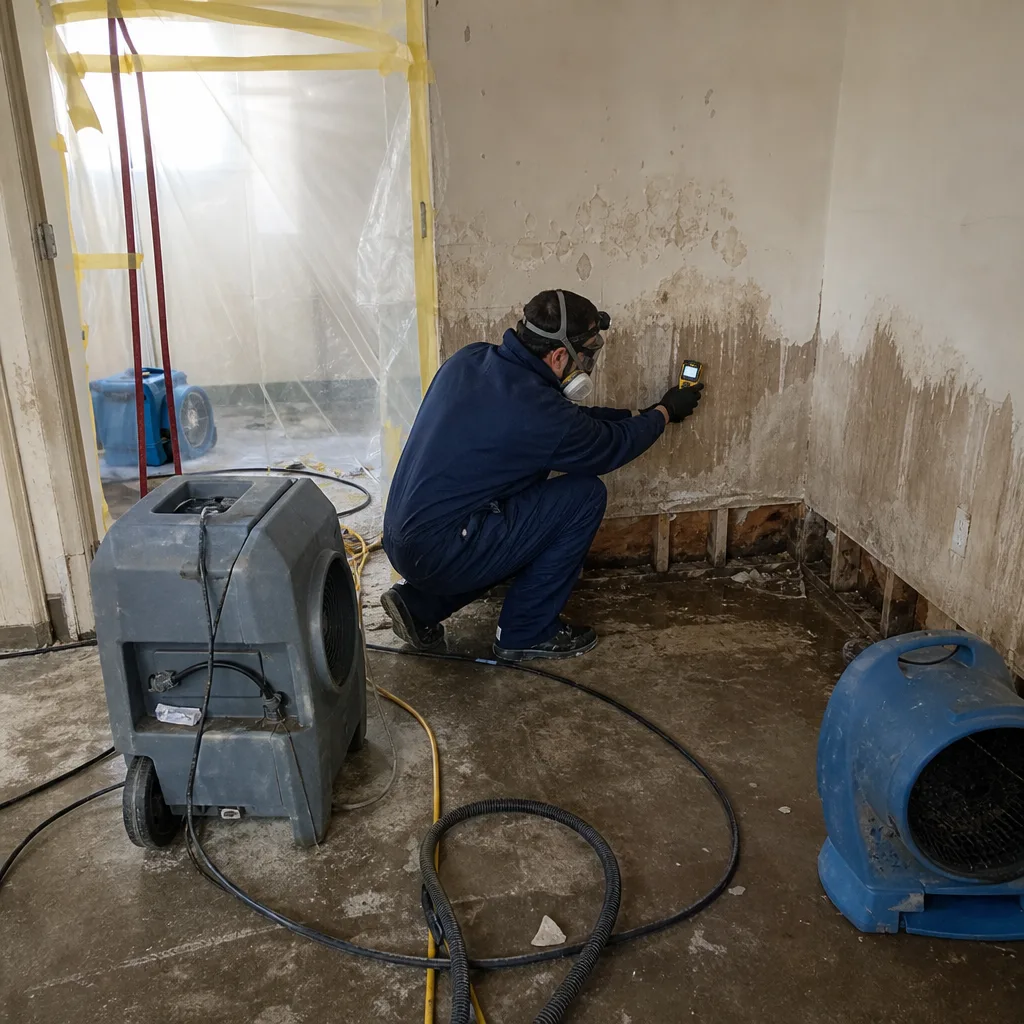 Before
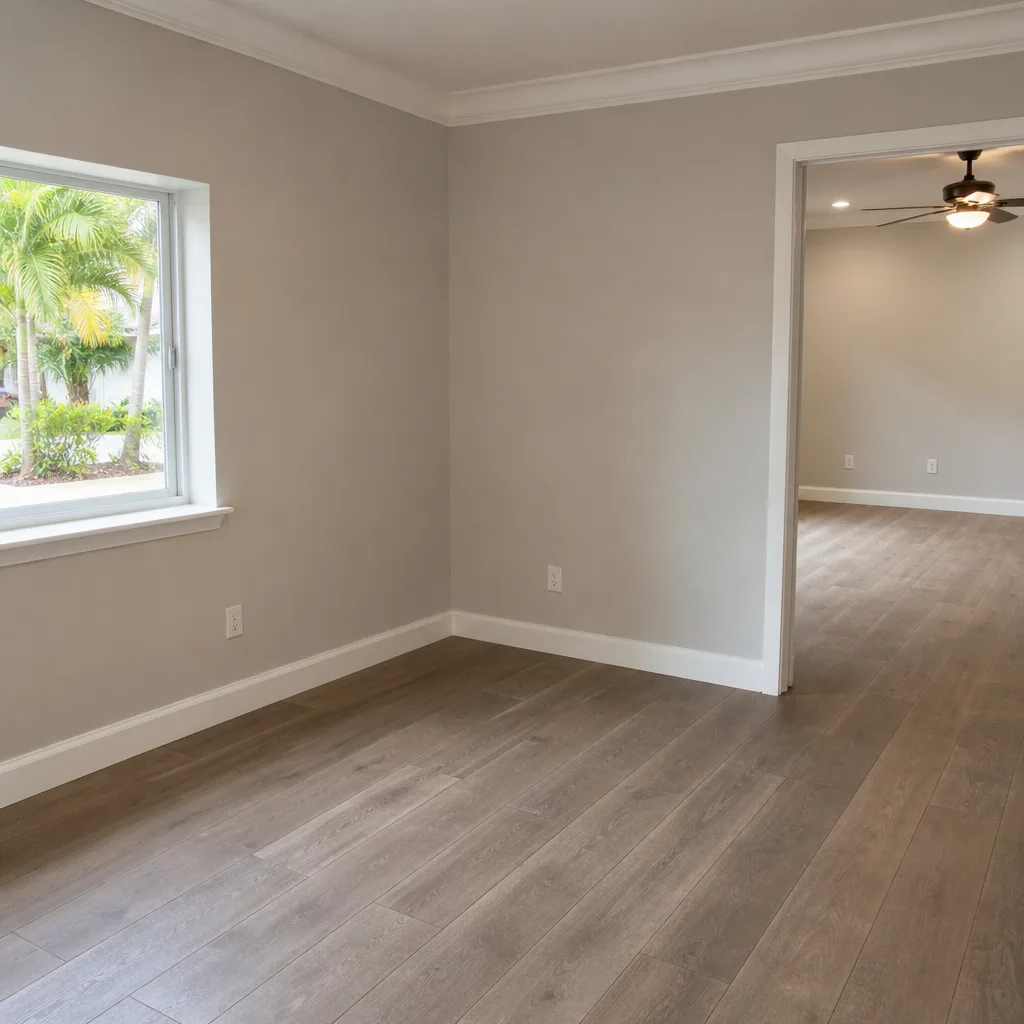 After
After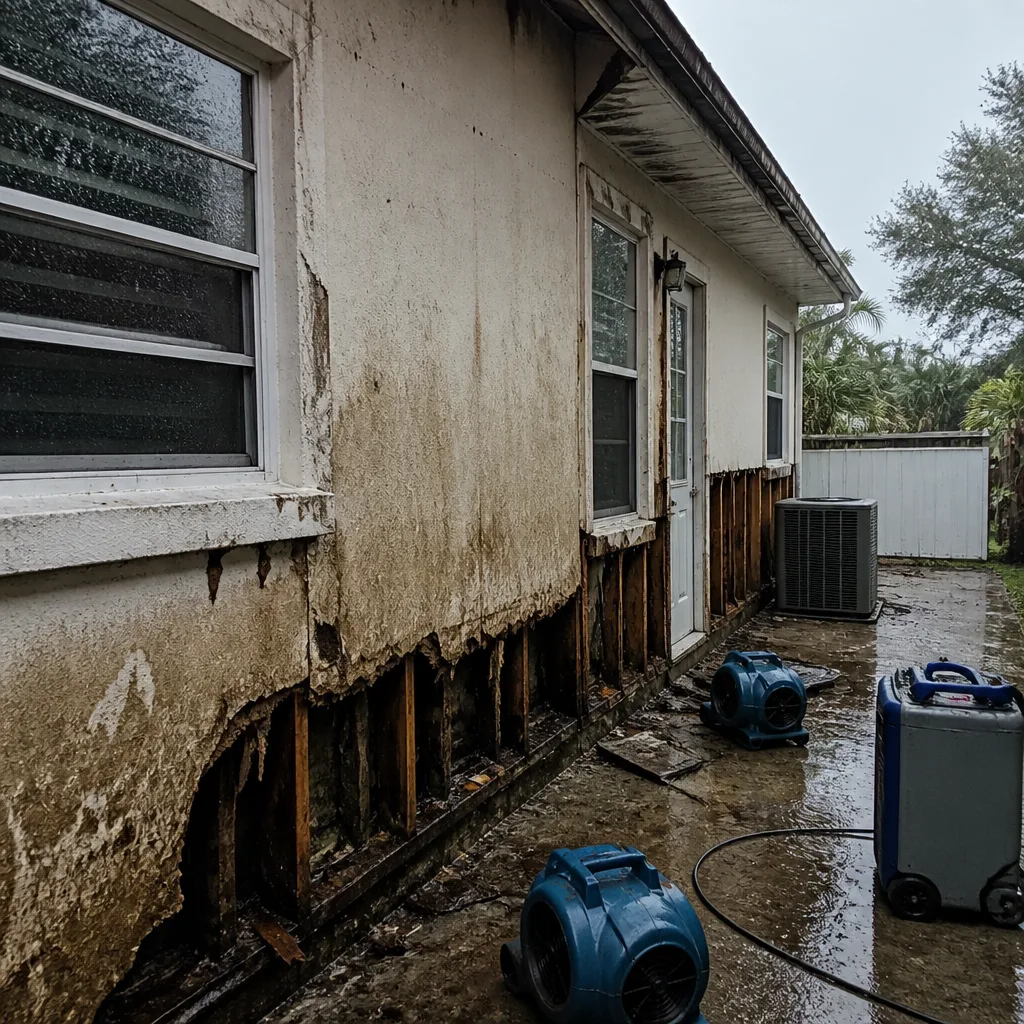 Before
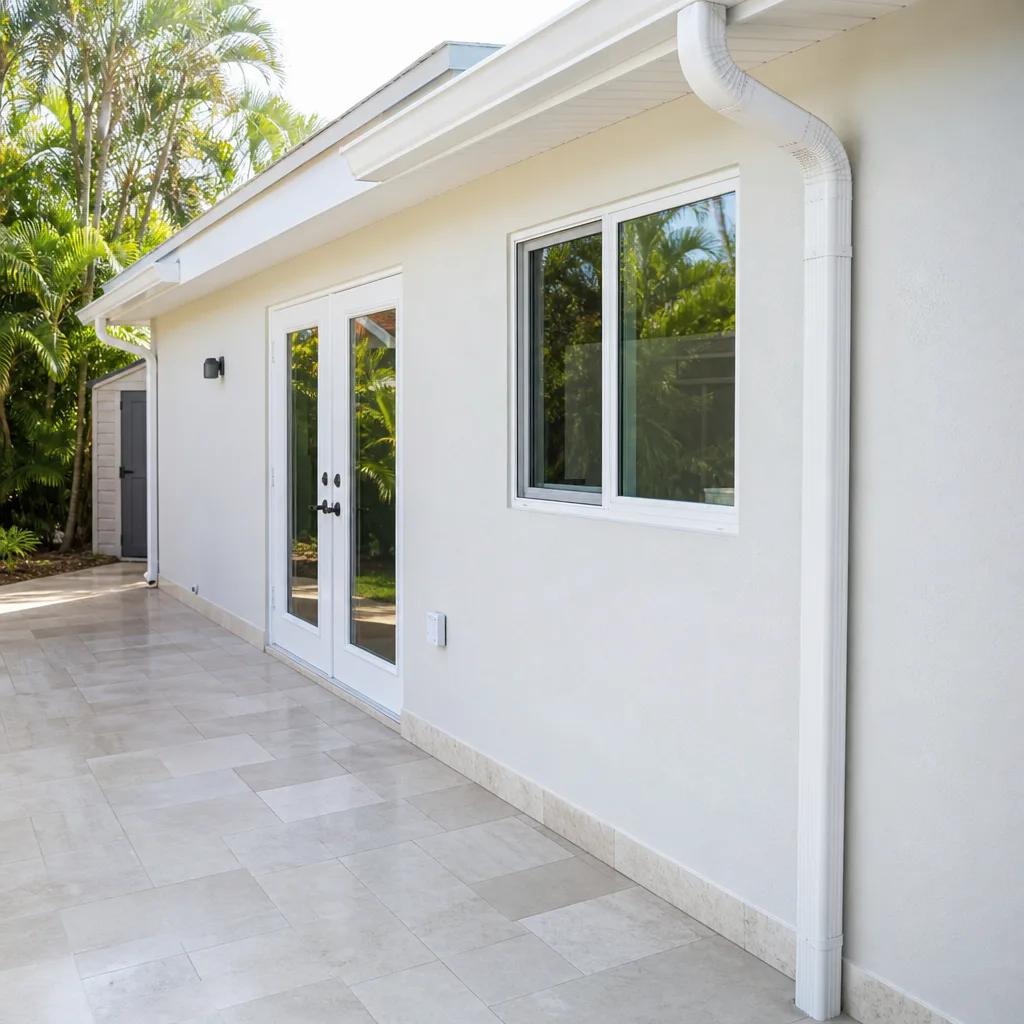 After
After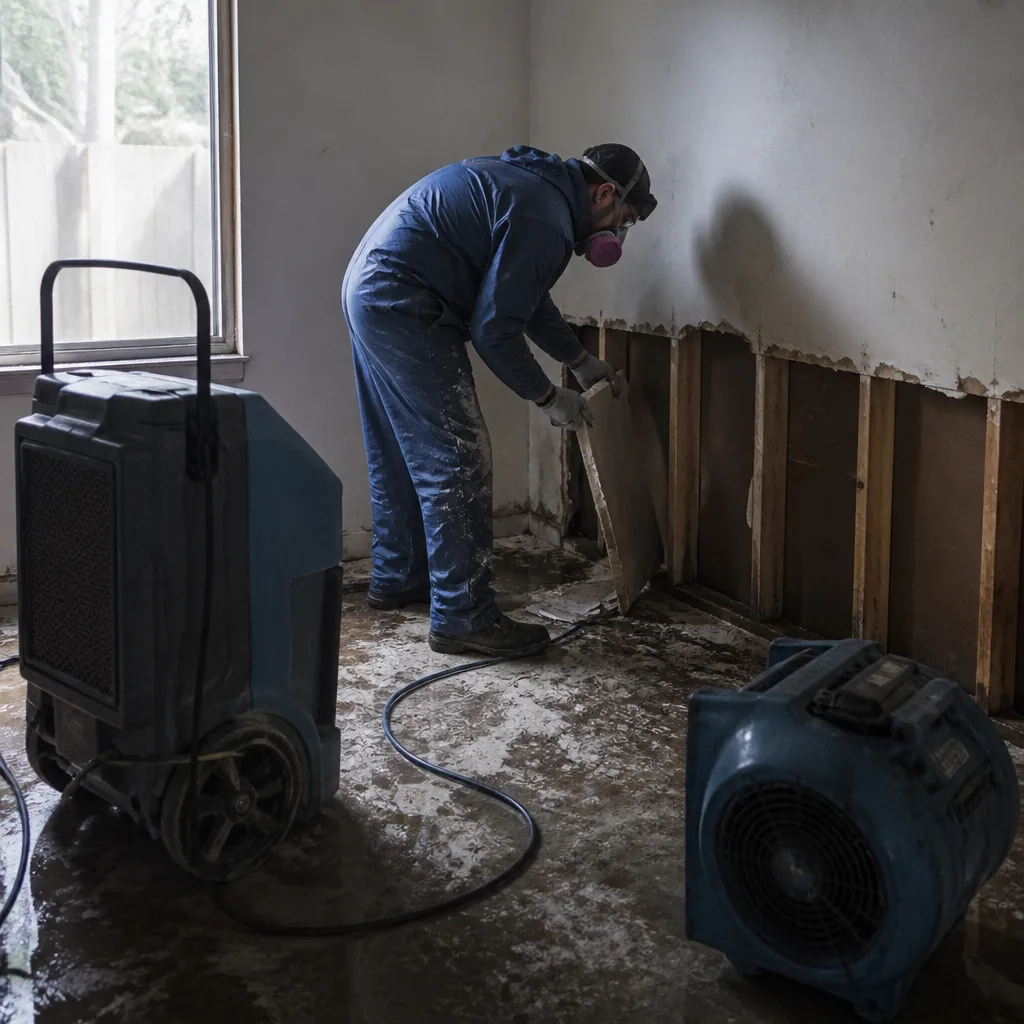 Before
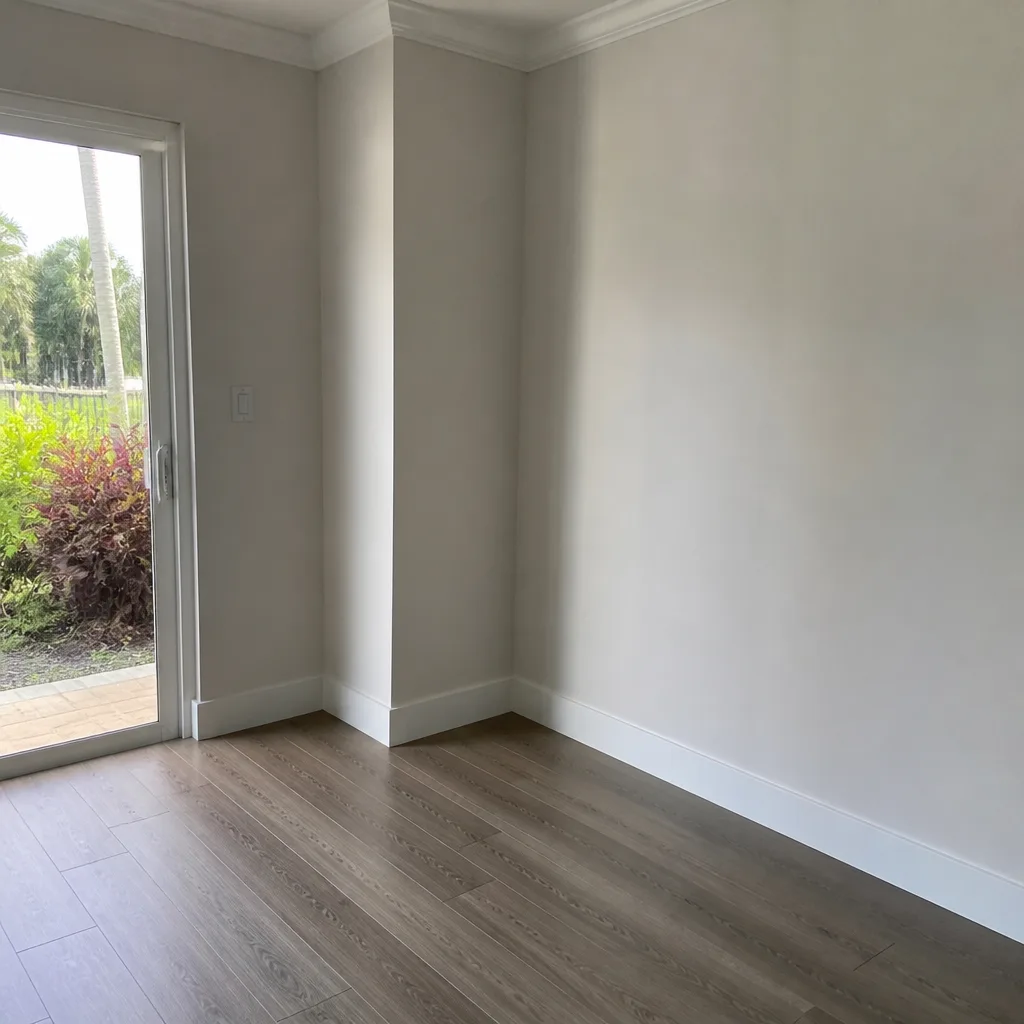 After
AfterWhen to Call a Professional
You should call a professional restoration contractor when the water event extends beyond a single room, when water has penetrated walls or flooring, when visible mold is present in an area larger than about 10 square feet, or when the water source is a sewage backup or Category 3 contamination. Fort Lauderdale’s humidity means the window for DIY drying is short: a saturated wall cavity in a 75-degree, 80-percent-humidity house starts supporting microbial growth within 48 to 72 hours. If you’re not sure whether you need professional help, a reputable company will tell you the truth rather than selling you a service call; for year-round seasonal damage restoration care in Fort Lauderdale, planning ahead helps you know when to call. Wendell Restoration Fort Lauderdale offers free estimates across Fort Lauderdale. Call (754) 354-1463 and a live person answers, 24/7. We’ll tell you what we think, even if the honest answer is that you don’t need us.
Frequently Asked Questions
In Fort Lauderdale, a typical single-room Category 1 water damage mitigation job runs from $1,800 to $4,500 including extraction, drying equipment, and monitoring, while whole-home mitigation from a burst supply line can reach $12,000 to $25,000 depending on square footage and how quickly the water was discovered. The biggest variable in Fort Lauderdale is whether the damage is from clean water (Category 1), gray water (Category 2), or sewage or flood water (Category 3), because each category changes the scope. Call (754) 354-1463 for an exact quote based on your home and damage; estimates are free, and ours comes in writing before any work starts.
A phone-first company like Wendell Restoration Fort Lauderdale can have a background-checked, uniformed technician dispatched to most Fort Lauderdale neighborhoods within a few hours of your call, and you get a live arrival time you can track rather than a vague four-hour window. For sewage backups or active leaks, response time matters because the damage is compounding while you wait. Water damage does not keep business hours, and neither does Wendell, which is why our phones are answered by a live person 24/7, not a voicemail or callback queue.
Most homeowners policies cover sudden and accidental water damage, like a burst pipe or an appliance supply line failure, but they typically exclude damage from gradual leaks, neglect, or flooding that requires a separate flood insurance policy. A good restoration contractor in Fort Lauderdale will document everything with before-and-after photos and provide a line-item invoice your adjuster can actually use. We coordinate directly with insurance adjusters and send photo updates by text so you see exactly what your insurer sees.
If water has touched drywall, insulation, or flooring for more than 48 hours, you’re past the cleaning stage and into remediation territory, because Fort Lauderdale’s ambient humidity accelerates mold growth inside wall cavities even when the surface looks dry. A licensed contractor with IICRC-certified technicians can tell you which category of water you’re dealing with and whether the affected materials need removal or just professional drying. Psychrometric readings, which track the air’s moisture level, show when a home is truly dry, not just surface-dry.
You do, but you shouldn’t have to do it alone. A professional restoration contractor will speak with your adjuster, explain the drying methodology and scope, and provide documentation that makes the claim easier to process. What you should never do is sign an assignment-of-benefits agreement that hands your insurance rights to the contractor and lets them bill your insurer directly without your review. Keep yourself in the loop, keep the adjuster informed, and let the contractor handle the technical questions.
Look up the company’s legal business name on the DBPR’s online portal at myfloridalicense.com and confirm the license type and status. For water damage restoration in Fort Lauderdale, you want to see an active General Contractor or Building Contractor license, and if mold is involved, a separate Mold Remediation license. The check takes under a minute, and a company that can’t produce a license number when asked has already told you everything you need to know.
The Bottom Line
Hiring a damage restoration contractor in Fort Lauderdale does not need to be a gamble. Verify the DBPR license, including a mold-specific credential if mold is present. Reject any contract with assignment-of-benefits language, open-ended billing, or a verbal-only price. Demand a written scope of work with affected square footage, drying method, equipment count, and a fixed price before any equipment enters your home. Ask for a trackable arrival time and pay attention to whether the company can actually give you one. A restoration company that puts the price in writing first, shows up when it says it will, documents the work with before-and-after photos, and stands behind the repair with a written guarantee is the company you want; see our more guides & resources for additional homeowner protection tips. Wendell Restoration Fort Lauderdale does all of that. Call (754) 354-1463 for a free estimate, and a live person will answer, 24/7.
Written by Blake Sorensen, Owner at Wendell Restoration Fort Lauderdale, serving Fort Lauderdale since 2006.