
Last updated October 16, 2026
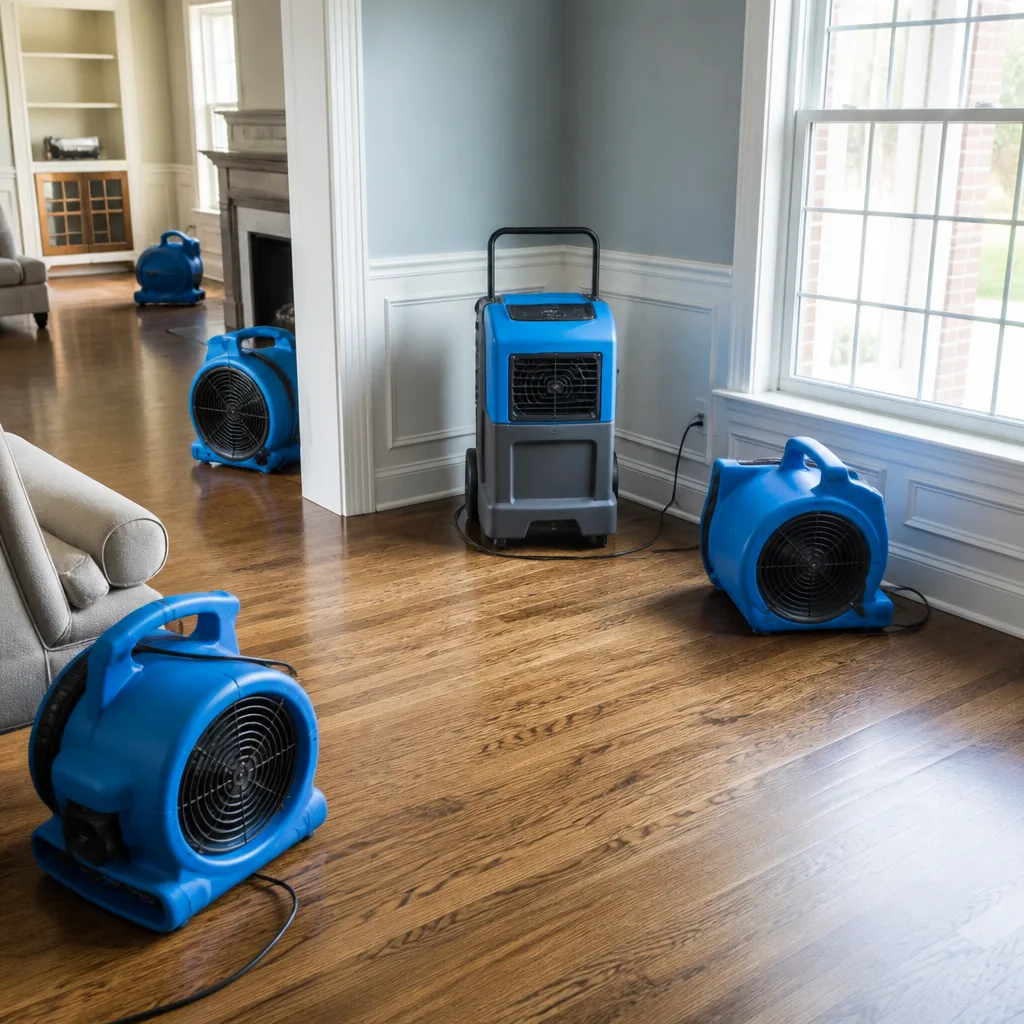 Water damage drying
 Fire & smoke cleanup
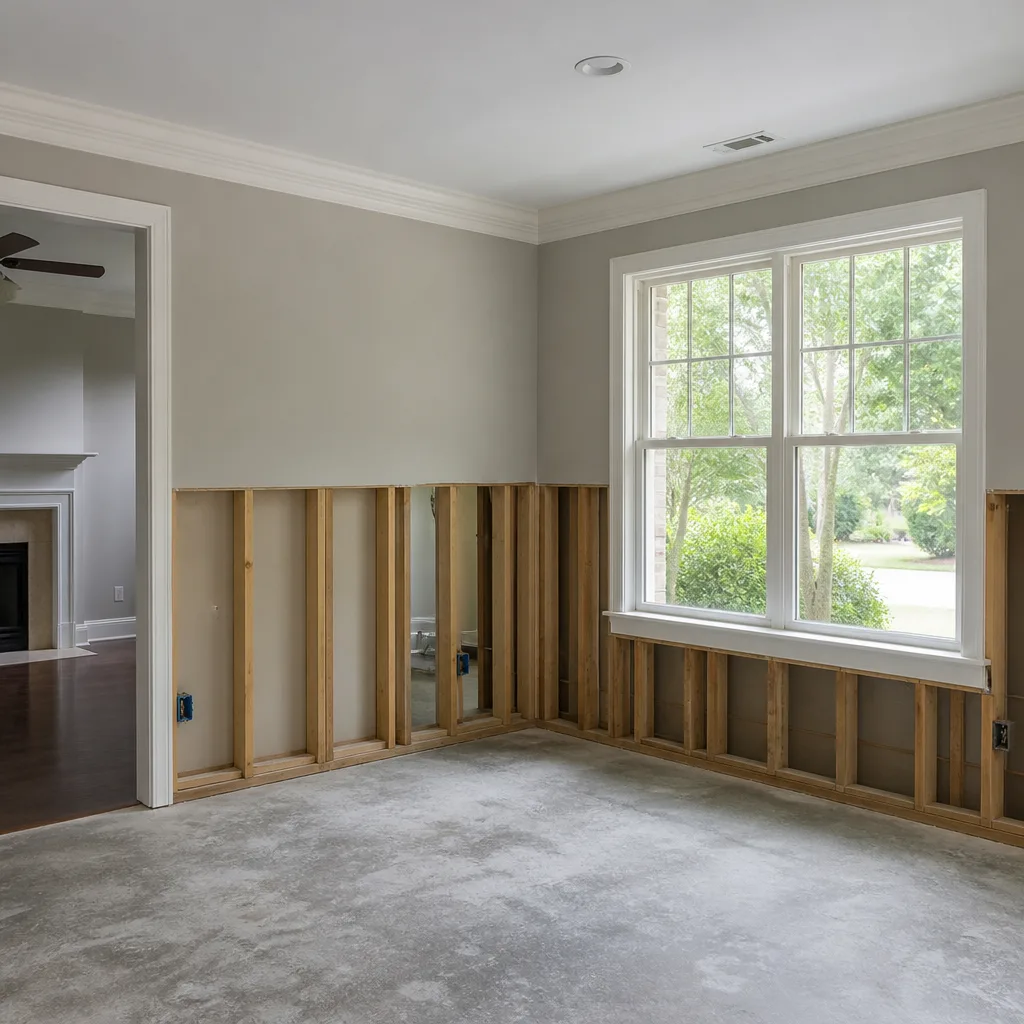 Mold remediation
 Storm response
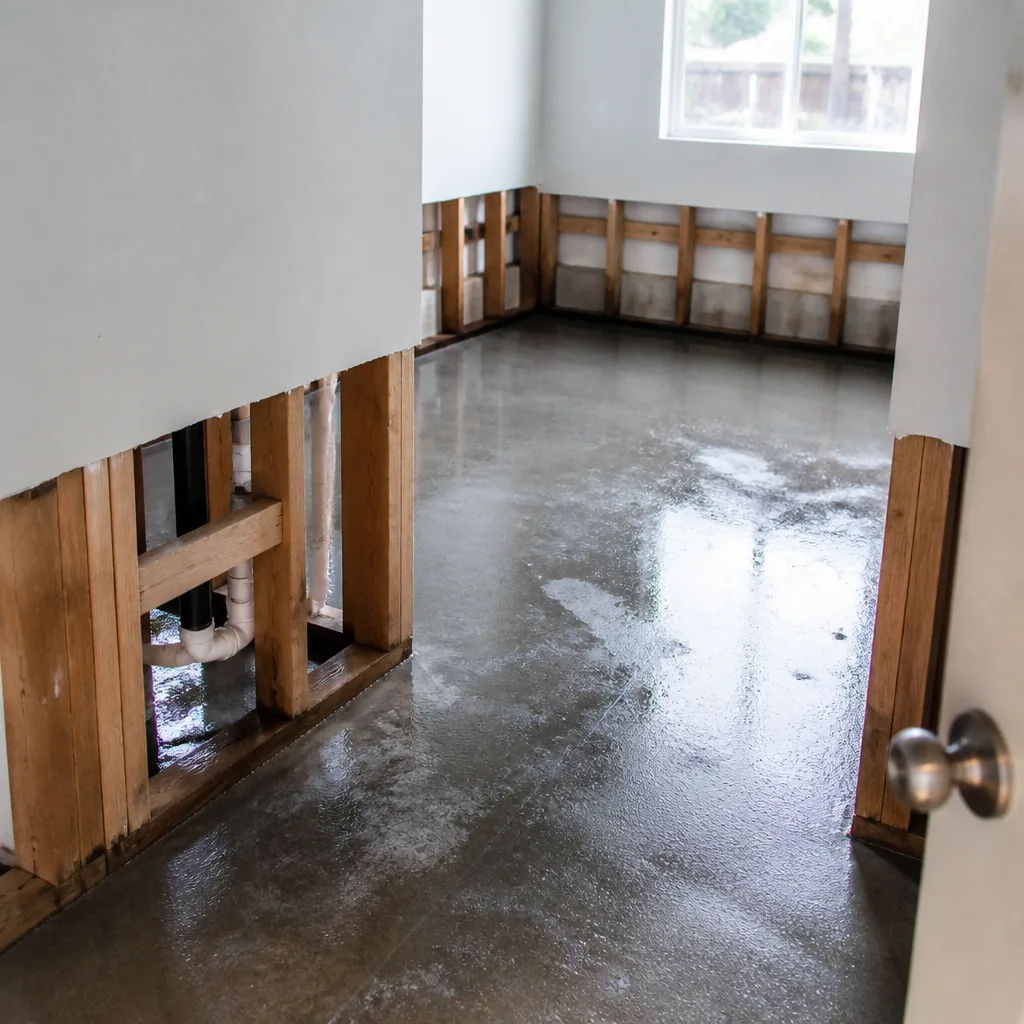 Sewage cleanup
 Reconstruction
Free visual inspection and a written scope of work before any mitigation begins - photos, moisture readings, and drying logs go in your claim file
The scope we write is the scope we bill. Anything new gets shown to you, in writing, before we touch it.
Get your free estimateDamage Restoration Cost Breakdown: The Fort Lauderdale Homeowner’s Reference for 2026
Fort Lauderdale restoration invoices run 20 to 35 percent higher than national averages. That gap isn’t because local companies are greedier. It’s driven by Broward County’s licensed-trades requirements, coastal material logistics, and insurance complexity that most homeowners never see until the bill arrives. This guide breaks down where every dollar actually goes on a water damage, mold, or repair job in Fort Lauderdale so you can read a quote like someone who knows the trade, not someone about to write a five-figure check blind. For Damage Restoration Warning Signs: A Fort Lauderdale Homeowner’s Reference Guide, see our companion post.
Quick Answer
Water damage restoration in Fort Lauderdale typically costs $3.75 to $7.50 per square foot for extraction and drying in 2026, with mold remediation adding $15 to $30 per square foot when it’s needed. A full-scope restoration job on a 1,500-square-foot home with moderate damage, including drywall replacement, drying equipment, and antimicrobial treatment, usually lands between $6,500 and $18,000 before insurance depreciation is applied. The single most controllable cost variable is the contractor’s markup on subcontracted trades, which can legally run 20 to 50 percent above the sub’s actual invoice and almost never appears as a separate line item.
Restoration work we handle
Table of Contents
- 2026 Line-Item Costs: What Every Category Actually Costs in Fort Lauderdale
- Why Broward County’s Licensed-Trades Rules Inflate Restoration Costs
- Three Invoice Line Items Homeowners Overpay Without Realizing
- How to Read an Xactimate Estimate Next to a Contractor’s Quote
- How a Written-Price-Before-Work Model Changes the Cost Conversation
- Will Insurance Cover This? The Fort Lauderdale Homeowner’s Reality Check
- Scope Gaps: Where Adjusters and Contractors Disagree, and You Pay
- What You Can Safely Handle Yourself vs. What Needs a Pro
2026 Line-Item Costs: What Every Category Actually Costs in Fort Lauderdale
Restoration pricing is line-item pricing. Once you know the unit costs, a quote stops being a wall of numbers and becomes something you can audit. Here’s what our technicians see on actual Fort Lauderdale job sites in 2026, using IICRC-standard practices and professional-grade equipment.
| Service Category | Typical 2026 Range | What Affects the Price |
|---|---|---|
| Water extraction (per sq ft) | $3.75 – $7.50 | Water category (clean vs. sewage), flooring type, how long water sat |
| Commercial dehumidifier rental (per unit, per day) | $95 – $185 | Unit capacity, low-grain vs. standard, project duration |
| Air mover (per unit, per day) | $35 – $65 | Number of affected rooms, ceiling vs. floor units |
| Antimicrobial treatment (per sq ft) | $0.75 – $2.00 | Product type, saturation level, containment requirements |
| Drywall replacement (per linear foot) | $45 – $90 | Ceiling vs. wall, finish level, texture matching |
| Baseboard replacement (per linear foot) | $6 – $14 | Material, height, paint or stain finish |
| Content pack-out (per room) | $350 – $900 | Volume, fragility, cleaning requirements |
| Mold remediation (per sq ft) | $15 – $30 | Containment size, HVAC involvement, air quality testing |
| Reconstruction / rebuild (per sq ft) | $40 – $90 | Finishes, permitting, licensed trades scope |
Two things drive these numbers in Fort Lauderdale specifically. First, the humidity. A dehumidifier running in a Fort Lauderdale home in August works against 80 percent ambient moisture, which means more units, longer run times, and a higher drying bill than the same job in Orlando or Tampa. Second, material costs. Drywall, lumber, and flooring all come through South Florida supply chains that consistently price 8 to 15 percent above the national average because of port logistics and hurricane-demand cycles.
For a deep dive on how drying actually works and what’s included in extraction, see our Water Damage Restoration in Fort Lauderdale guide.
Why Broward County’s Licensed-Trades Rules Inflate Restoration Costs
Here’s something most homeowners don’t learn until a second quote forces the question: restoration companies in Fort Lauderdale are not allowed to self-perform electrical and plumbing work. For the full regulatory picture, read Damage Restoration Permits, Codes & Inspections in FL: What You Need to Know. Broward County requires those trades to be executed by separately licensed contractors. That means whenever a pipe repair, a water heater replacement, or a rewiring job sits inside your restoration scope, a sub shows up on the invoice.
The sub bills the restoration company. The restoration company adds a markup. That markup is legitimate, covers project coordination, scheduling, and warranty integration, but it’s also where invoices get fat. In markets where restoration companies hold in-house plumbing and electrical licenses, there’s no intermediary markup. In Fort Lauderdale, there is one, by rule, on every job that touches those systems.
What does that mean in dollars? Here’s a realistic example. A plumber’s invoice to repair a burst supply line might be $650. The restoration company’s line item for that same repair often lands between $780 and $975. The plumber did the same work either way. The difference is the coordination layer, and it’s not inherently wrong to pay for it. But it should be visible, and on many invoices, it isn’t. The labor and material costs get rolled into a single “Plumbing Repair” line with no indication of what portion is the sub’s charge and what portion is markup.
Ask the question straight: “Will you be self-performing the plumbing and electrical on this job, and what is the sub’s actual invoice amount?” You won’t always get a clean answer, but the contractors who answer clearly are the ones you can work with.
Electrical work is the same story. A licensed electrician in Fort Lauderdale charges $95 to $150 per hour. The sub markup pushes your effective rate to $120 to $190 per hour once the restoration company’s coordination fee is included. On a job with 10 hours of electrical work, that’s $950 to $1,500 of cost you can see clearly or not see at all, depending on the invoice format.
Three Invoice Line Items Homeowners Overpay Without Realizing
Fort Lauderdale homeowners sign restoration contracts under stress. Water is spreading, mold is growing, the adjuster hasn’t called back. In that state, most people scan the total, check the insurance deductible, and sign. That’s exactly when three line items get through that deserve a second look.
1. Equipment Mobilization Fees
This is a fee for “bringing equipment to the site.” On some invoices, it’s $250 to $500. Here’s the problem: most Fort Lauderdale restoration companies already build equipment delivery and setup into their daily equipment rental rates and their labor hour charges. A separate mobilization fee on top of those is often a duplicate. Ask whether the mobilization fee covers anything beyond what’s already itemized in the equipment rental line. If the answer is vague, you’re being charged twice for the same truck.
2. Hazardous Waste Disposal
Legitimate on Category 3 water jobs (sewage, flood water, any water that contacted feces or chemicals). On a Category 1 clean-water supply line break, there is no hazardous waste. Yet “haz waste disposal” lines of $150 to $400 appear on clean-water invoices all the time. The word “hazardous” gets used by lazy billing departments as a catch-all for any disposal cost. Nothing about a clean supply line break produces hazardous material. If the line is on your invoice and the water came from a supply line or a water heater, question it. If the water came from outside or from a sewage backup, pay it without argument. It’s real and required.
3. Project Management Overhead
This one is the biggest. A “project management” or “overhead” line of 10 to 15 percent of total job cost is common. But project management should already be embedded in the markup on labor and materials. When it also appears as a separate percentage line, you’re paying for the privilege of being managed twice. The fairest invoices don’t have this line at all. They have hourly rates, material costs with transparent markup, and subs with transparent passthrough. Anything labeled “overhead” over 12 percent deserves a direct question.
For mold jobs specifically, the markup patterns shift. See our Mold Remediation in Fort Lauderdale page for what containment, air scrubbers, and clearance testing should cost in this market.
How to Read an Xactimate Estimate Next to a Contractor’s Quote
Insurance adjusters in Fort Lauderdale almost universally use Xactimate, a software platform that prices restoration work based on regional cost data. Your contractor’s quote might use Xactimate too, or it might use internal pricing. Either way, you will likely have two documents in front of you, and they will not look the same.
Here’s how to compare them without losing your mind.
- Find the line-item count discrepancy. An adjuster’s Xactimate estimate might have 40 line items. A contractor’s quote might have 12. The gap is not usually fraud. It’s granularity. Xactimate breaks demolition into room-by-room, surface-by-surface lines. A contractor might lump “demolition” into one number. The problem: when the scope is broad, you can’t tell what’s actually included, and that’s where gaps hide.
- Check for demolition scope. The most common gap on Fort Lauderdale claims is demolition and disposal of flooring and drywall. Adjusters sometimes omit it entirely on the first pass, expecting the homeowner or contractor to submit a supplement. If your contractor’s quote includes demolition but the Xactimate doesn’t, that’s not a scam. It’s a scope gap you’ll need to close with a supplement request before work starts.
- Compare drying equipment days. Xactimate prices drying equipment per day, typically with a 3 to 5 day assumption. A Fort Lauderdale drying job in humid conditions may need 5 to 7 days. The adjuster’s number will be low. The contractor’s number may be realistic or padded. Ask how many days of drying were budgeted and why.
- Verify the “O&P” line. Overhead and Profit, usually 10 and 10 percent, is a standard allowance when the insured uses a general contractor. It’s legitimate on restoration jobs that involve multiple trades. When the restoration company self-performs most of the work, O&P is less defensible. If it’s on your contractor’s quote and the job is mostly drying, question it.
The Fort Lauderdale insurance market adds another layer. Many homeowners here carry windstorm and flood coverage through separate policies, and the claim dance between those two policies generates its own delay. For water damage from a pipe, your standard homeowners policy applies. For storm surge or rising water, flood insurance applies. The two never overlap, and a contractor who understands which one applies saves you weeks of adjuster back-and-forth.
How a Written-Price-Before-Work Model Changes the Cost Conversation
Most restoration contracts in Fort Lauderdale are written as “estimates” that can shift once work begins. The industry standard is to price the visible scope, start demolition, and then send a supplement when hidden damage appears. That supplement is where costs balloon. It’s also where homeowners feel trapped, with walls already open and a crew already on site.
A written-price-before-work model changes the timeline. Here’s what to expect at quote time, what can legitimately change, and what should never change once it’s signed.
What to Expect at Quote Time
You should get a line-item written price. Not a range. Not a verbal “probably around.” A document that lists every category, every unit cost, and every assumption. The price reflects what the technician saw at the time of the inspection. If the inspection happened before walls were open, the written price should state clearly which areas are provisional and what the trigger is for a scope change.
What Can Legitimately Change
Mold behind a wall that wasn’t visible at inspection. Water that traveled farther than the moisture meter indicated. Subfloor damage discovered after carpet removal. These are legitimate changes. The key is that each change should come with a written addendum before the work proceeds, not a surprise at the end. The IICRC standard of care supports this: document, scope, approve, execute.
What Should Never Change
The unit rates. If your contract says drywall replacement is $65 per linear foot, it should be $65 per linear foot whether the job uses 10 feet or 100 feet. The equipment rental daily rate should stay fixed. The labor hourly rate should stay fixed. Volume changes are legitimate. Rate changes are not.
At Wendell Restoration Fort Lauderdale, we put the price in writing before any work starts, and the number on the screen is the number you pay. Every job includes a written guarantee, and if a repair fails, we come back for free. That’s the 365-Day Done Right Promise, stated in writing on every single job. It doesn’t change the physics of what drying costs. It changes who carries the risk when the scope shifts.
Will Insurance Cover This? The Fort Lauderdale Homeowner’s Reality Check
Short answer: your policy covers sudden and accidental water damage, not gradual leaks or lack of maintenance. A supply line that bursts and floods your kitchen is covered. A slow drip under the sink that you ignored for eight months is usually not. Mold coverage varies widely by policy and is frequently capped at $1,000 to $10,000 in Fort Lauderdale, though the actual remediation often costs more.
Here’s the part that matters for cost. Your adjuster’s job is to pay what the policy requires. Your contractor’s job is to restore the property. Your job is to make sure those two scopes match. When they don’t, the difference comes out of your pocket. The three most common out-of-pocket gaps on Fort Lauderdale claims:
- Mold remediation beyond policy caps. Homeowners often learn about a $5,000 mold cap after $14,000 of remediation is already done. Check your policy’s mold language before you file.
- Code upgrades. If your home needs electrical or plumbing work to meet current Broward County code because of the damage, the insurance company may not pay for the upgrade portion. That’s on you.
- Depreciation recovery. Many policies pay actual cash value up front and hold back depreciation until the work is complete. You pay the holdback out of pocket and file for recovery later. That temporary gap can be $3,000 to $10,000.
Photo documentation changes how these gaps get handled. Before-and-after photos, moisture readings, and Dri-Eaz and Phoenix equipment logs attached to your claim file give your adjuster evidence to approve supplements. We text before-and-after photos as standard practice on every job in Fort Lauderdale, and they have closed thousands of dollars in gaps that otherwise would have stayed open.
Scope Gaps: Where Adjusters and Contractors Disagree, and You Pay
Adjusters and contractors see the same house differently. The adjuster prices what the policy and the software say is reasonable. The contractor prices what the job actually requires. The gap between those two views is measured in dollars and it lands on you.
The most frequent scope gaps we see in Fort Lauderdale:
- Drywall removal height. Adjusters often price for a 2-foot flood cut. Contractors find water wicking 4 feet up the wall. The extra drywall, insulation, and finish work goes to supplement, but if the adjuster disputes it, you’re left with either a partially repaired wall or an out-of-pocket bill.
- Flooring replacement. Tile that has detached from the subfloor has to come up. Adjusters sometimes price for clean-and-reinstall when the only correct fix is replacement. The material difference on a 400-square-foot Fort Lauderdale living room is $2,000 to $4,000.
- HVAC cleaning. Water in the ductwork means professional HVAC cleaning and antimicrobial application. Xactimate prices this conservatively. A proper duct cleaning with IICRC-standard antimicrobial treatment in a Fort Lauderdale home runs $500 to $1,200. The adjustment might allow $300.
- Content pack-out and storage. When floors are being replaced, furniture has to move somewhere. Adjusters sometimes price pack-out per room without accounting for the actual volume of contents. A full Fort Lauderdale home pack-out with storage can run $2,500 to $6,000. The policy may allow far less.
Each of these gaps is solvable. The mechanism is a supplement request with documentation: photos, moisture readings, and clear scope justification. A restoration company that knows how to write supplements is worth more than one that underbids the initial quote. The cheap quote becomes the expensive job when the supplement gets denied.
For the repair side of what happens after drying is done, our Water Damage Repair in Fort Lauderdale page covers what reconstruction should cost and how to scope it properly.
What You Can Safely Handle Yourself vs. What Needs a Pro
Not every restoration task requires a contractor. Some things are genuinely homeowner territory. Others are dangerous, or expensive to get wrong, or both. For the full breakdown, see DIY vs Professional Damage Restoration: The Fort Lauderdale Homeowner’s Decision Guide. Here’s the honest split.
Safe to handle yourself: moving small furniture out of an affected area, mopping up surface water from a clean source, running your home’s existing fans to reduce humidity, taking photos for your claim, and wiping down hard surfaces with a household cleaner before a pro arrives. These actions reduce damage and improve your claim documentation.
Do not try yourself: cutting into drywall to check for hidden water without knowing what’s behind it (wires, pipes, HVAC), removing sewage-affected materials without proper containment and PPE, running residential fans as a substitute for commercial drying (they lack the static pressure to dry wall cavities), and any electrical or gas-related work whatsoever. Broward County code requires licensed trades for a reason.
One more caution specific to Fort Lauderdale. The humidity here means surface-dry is not actually dry. A wall can feel dry to the touch in three days and still be holding 30 percent moisture inside the cavity, which is exactly where mold starts. Psychrometric drying, tracking the air’s moisture level so we know when your home is truly dry, not just surface-dry, is the professional standard for a reason. The equipment does the work; the data tells you when it’s done. DIY drying doesn’t produce data.
Common Mistakes to Avoid
- Signing a contract without unit rates. If the quote says “Drywall replacement: $4,200” but doesn’t show the per-linear-foot rate or the quantity, you can’t verify anything. Demand unit rates.
- Paying a large deposit before work starts. Fort Lauderdale restoration companies with real equipment and real crews don’t need 50 percent up front. A 10 to 15 percent deposit is defensible. More than that is a red flag.
- Not checking the mold cap on your policy. Fort Lauderdale homeowners discover their mold coverage limit after the mold is already found. Check it before you file, and plan around it.
- Accepting “equipment mobilization” as a line item without question. It’s often a duplicate of what’s already embedded in equipment rental. Ask what it covers.
- Letting the contractor talk directly to your adjuster without you in the loop. You should be on every call or email thread. The contractor and adjuster have different incentives. You are the only one whose incentive is a fully restored home at the lowest out-of-pocket cost.
- Assuming the first quote is the market price. Fort Lauderdale restoration pricing varies by 30 to 40 percent between companies for the same scope. Get at least two line-item quotes, even in an emergency.
See the difference
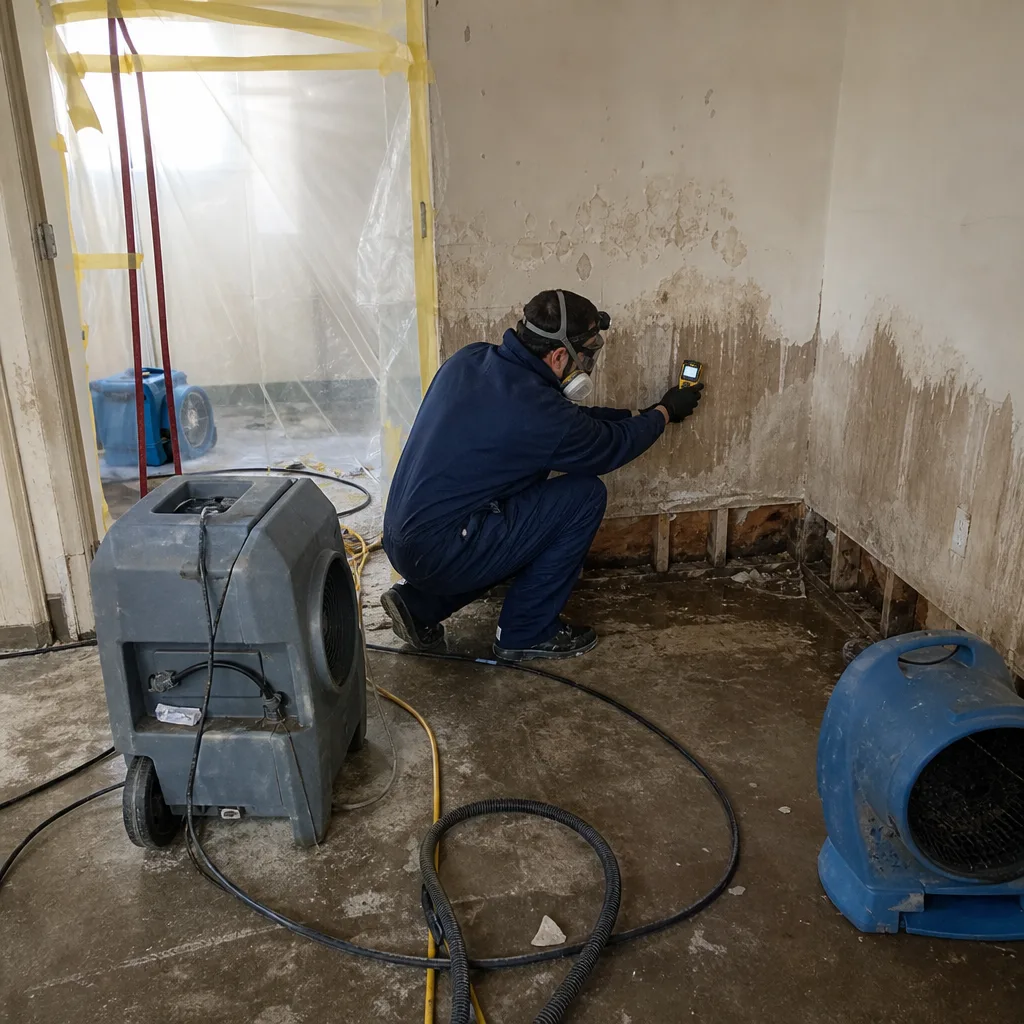 Before
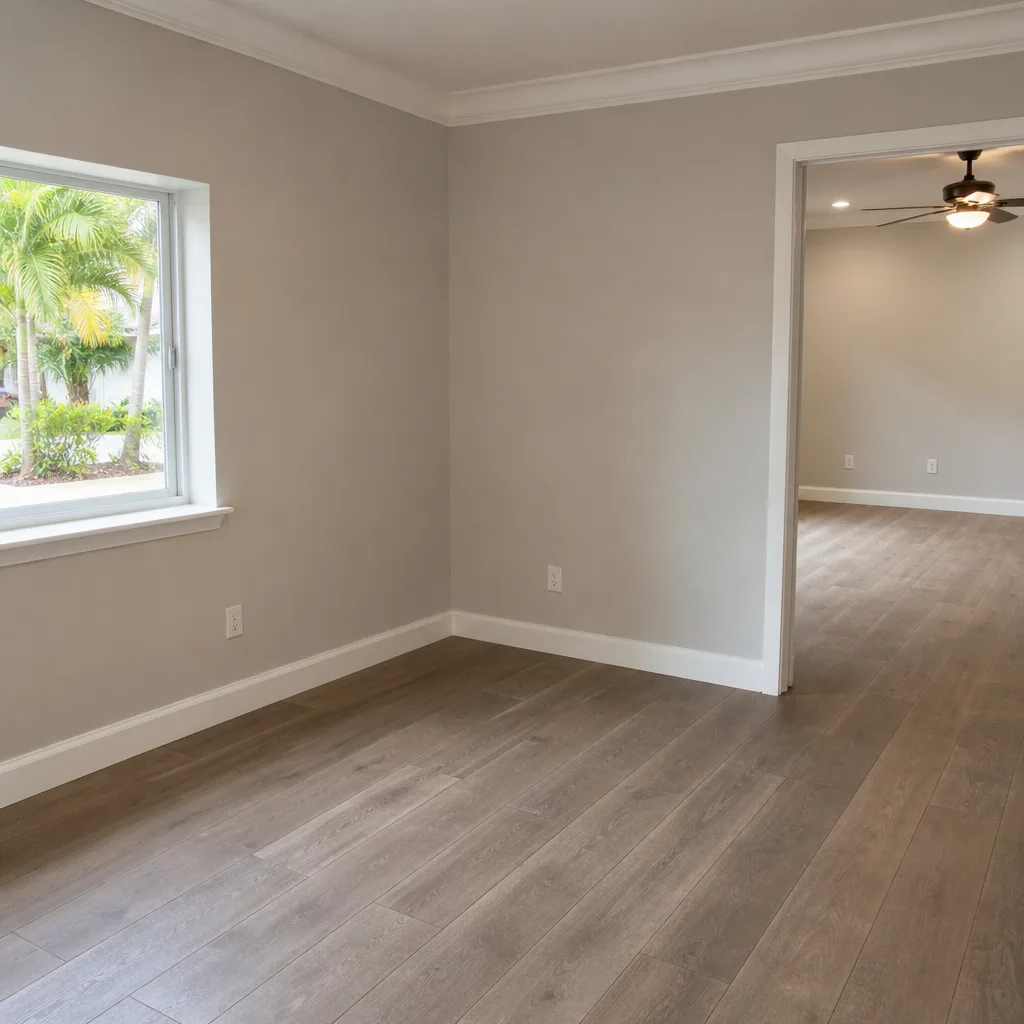 After
After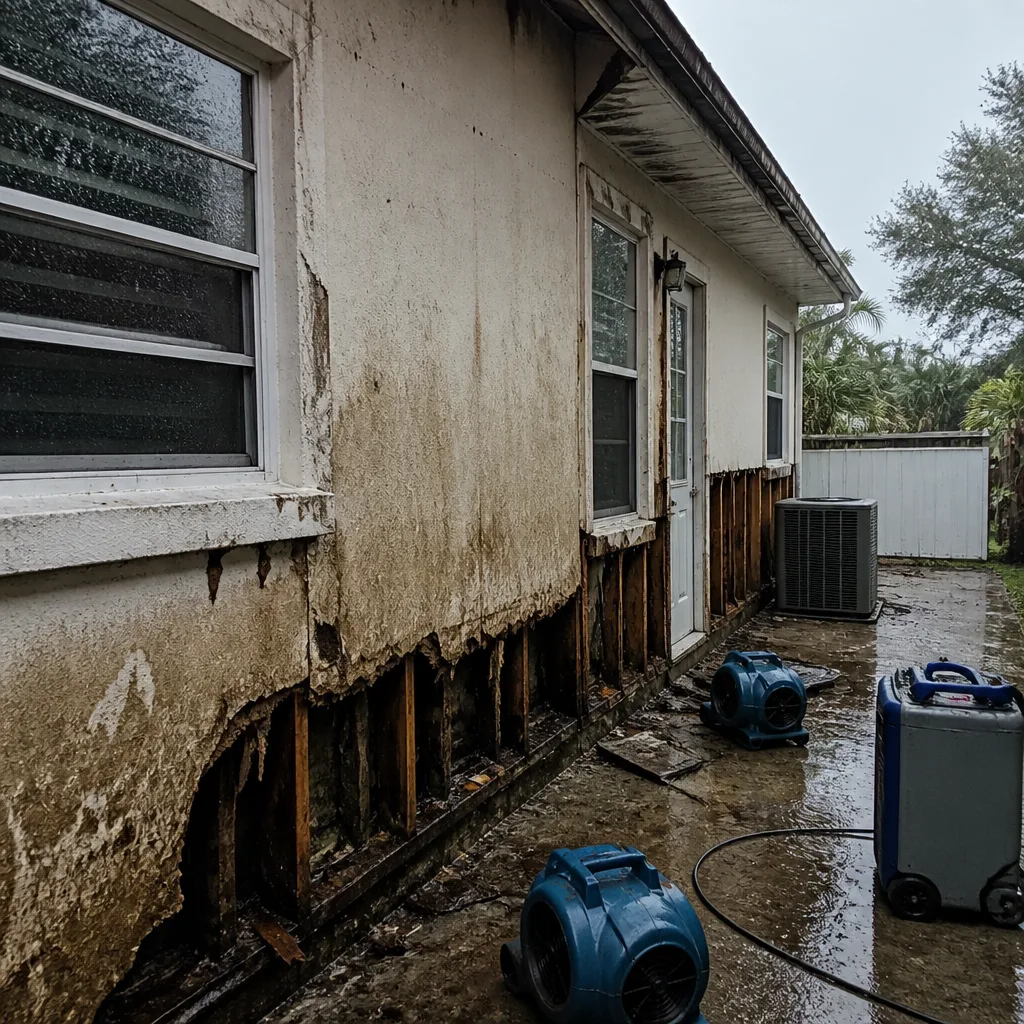 Before
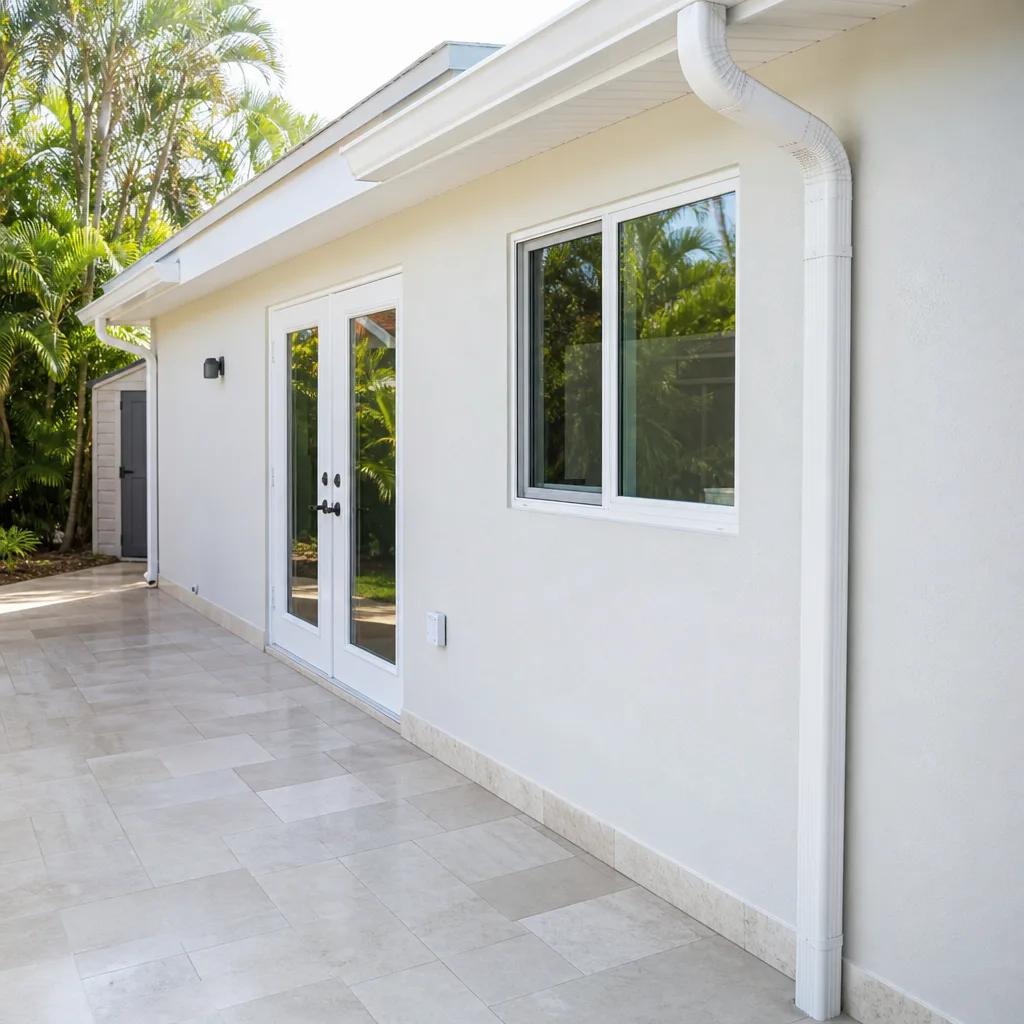 After
After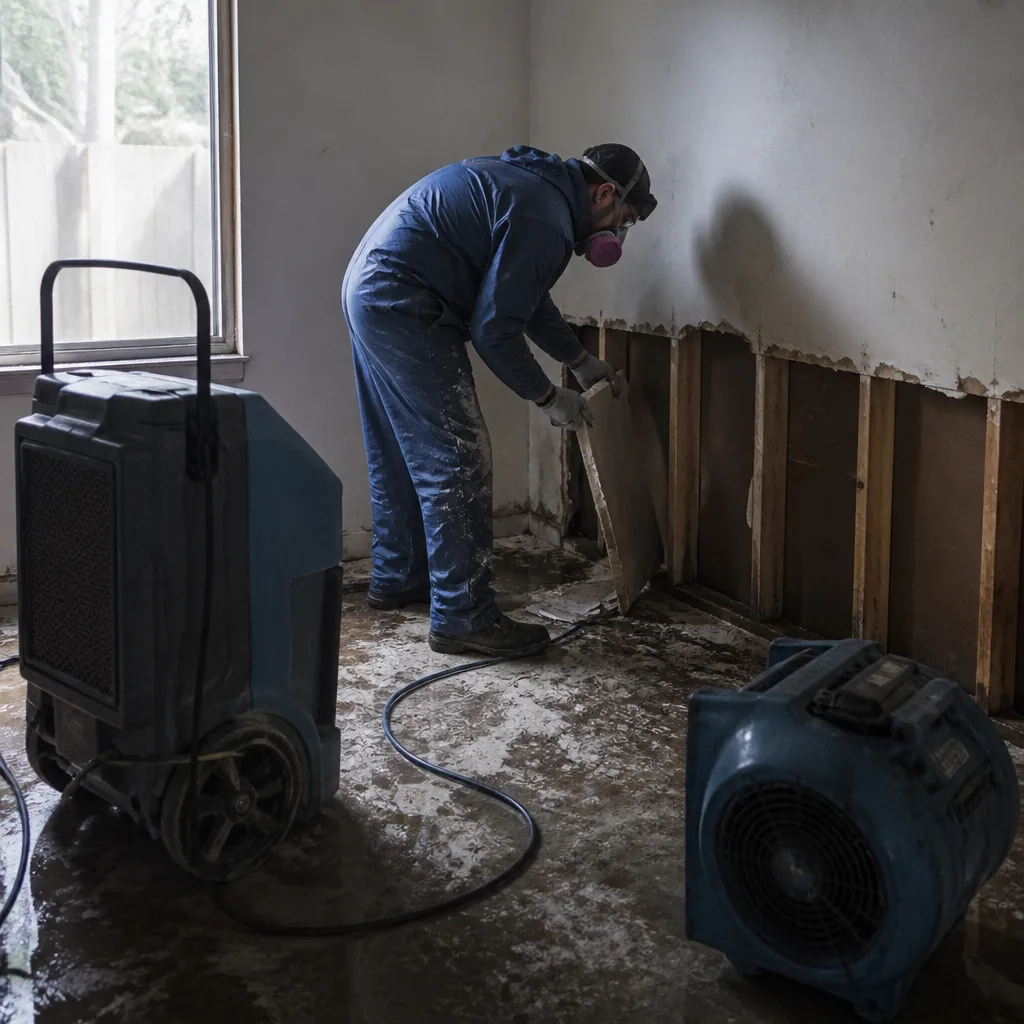 Before
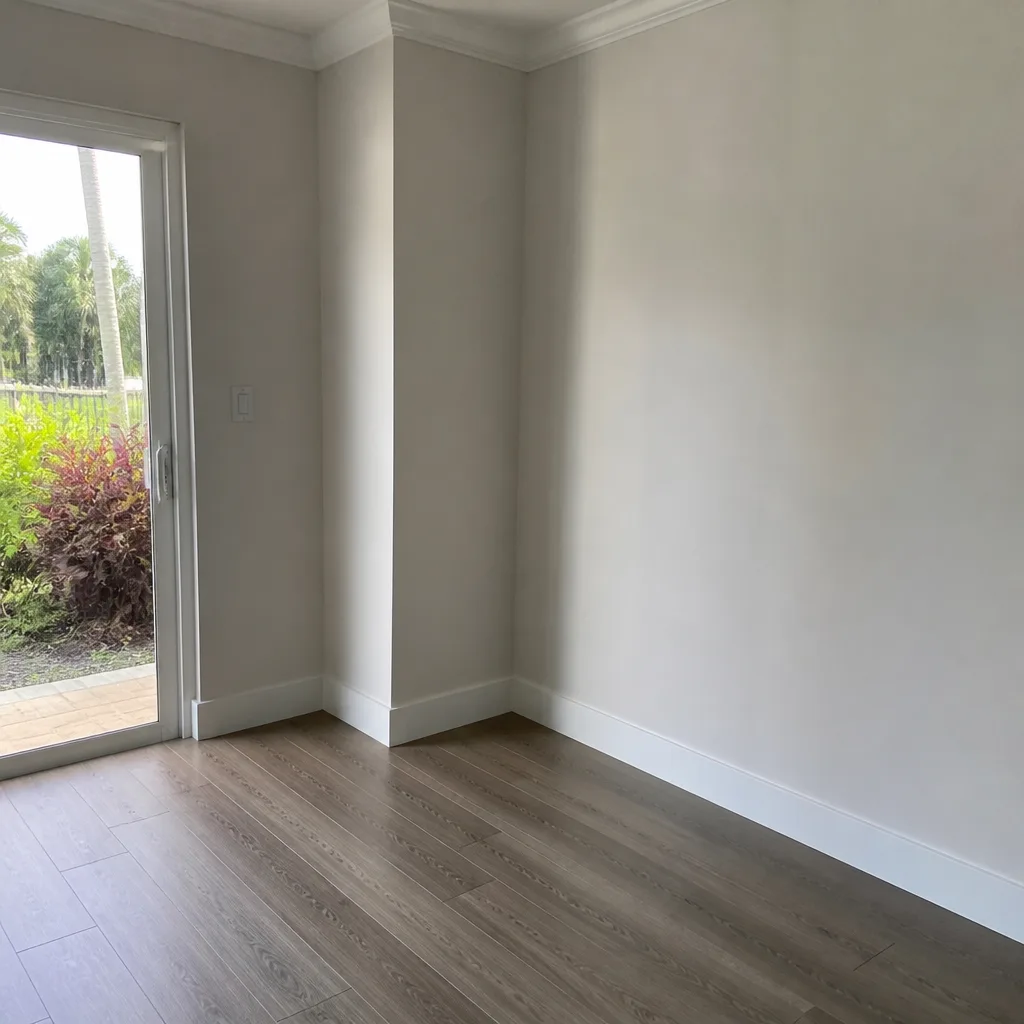 After
AfterWhen to Call a Professional
Call a professional when water has contacted drywall, flooring, or any porous material and you cannot see the full extent of the damage. Call immediately if the water came from a sewage source, if the electrical panel is wet, or if you smell mildew. Call before you file a claim if you want a written scope that helps your adjuster approve the work the first time. Call before you pull baseboards off the wall to “let it dry” in Fort Lauderdale’s humidity, because that’s how mold starts. Wendell Restoration Fort Lauderdale offers free estimates in Fort Lauderdale. Call (754) 354-1463 and a live person answers, 24/7.
Frequently Asked Questions
Water damage restoration in Fort Lauderdale costs $3.75 to $7.50 per square foot for extraction and structural drying in 2026, with most whole-room jobs landing between $2,500 and $8,000. The final number depends on the water category, affected square footage, and how quickly drying starts. Call (754) 354-1463 for a written quote on your specific scope.
Broward County requires separately licensed plumbing and electrical trades on restoration jobs, which adds a subcontractor markup that markets with in-house trades avoid. Fort Lauderdale’s humidity also extends drying times, and coastal material logistics push supply costs 8 to 15 percent above the national average.
Sudden and accidental water damage, such as a burst supply line, is covered under standard homeowners insurance in Fort Lauderdale. Gradual leaks, maintenance issues, and flood damage from rising water are typically excluded, and mold coverage is frequently capped at $1,000 to $10,000 depending on the policy.
A restoration company with 24/7 live dispatch can have a technician on site in Fort Lauderdale within 60 to 90 minutes in most areas, including emergency water extraction. Faster response means less demolition and a lower total cost. Wendell answers every call with a live person, 24/7, at (754) 354-1463.
If water touched porous materials like drywall, insulation, carpet pad, or wood subfloor, you need structural drying and likely some demolition, not just surface cleaning. In Fort Lauderdale’s humidity, wet cavities that aren’t properly dried will develop mold within 48 to 72 hours. Surface cleaning is only adequate for hard surfaces affected by clean water for under 24 hours.
A written price is a line-item document that states every rate and scope assumption before any work begins. It matters because most restoration contracts in Fort Lauderdale are estimates that can shift with hidden damage, and a written price locks the unit rates so only legitimate scope changes affect the total. Every Wendell job includes a written price before work starts, a written guarantee, and a free second visit if the repair fails.
The Bottom Line
Fort Lauderdale restoration costs more than the national average, but not because you’re being overcharged. The licensed-trades requirement, the humidity, the coastal material market, and the insurance complexity all push the total up. The key skill is knowing how to read the invoice. Unit rates, not lump sums. Visible sub markups, not rolled-up numbers. A written price that locks rates before work starts. When you can read a quote that way, the contractor and the adjuster both have to answer to you. That’s the position you want in 2026. For more guides & resources, visit our blog. Call (754) 354-1463 to get your free estimate, and you’ll get a written price you can actually read before any work begins.
Written by Blake Sorensen, Owner at Wendell Restoration Fort Lauderdale, serving Fort Lauderdale since 2006.